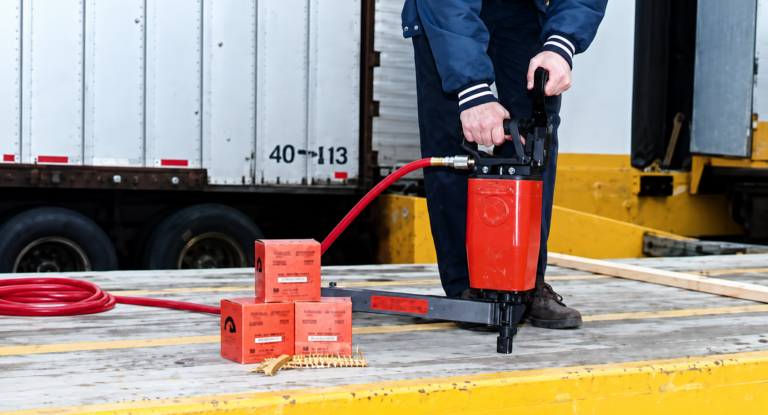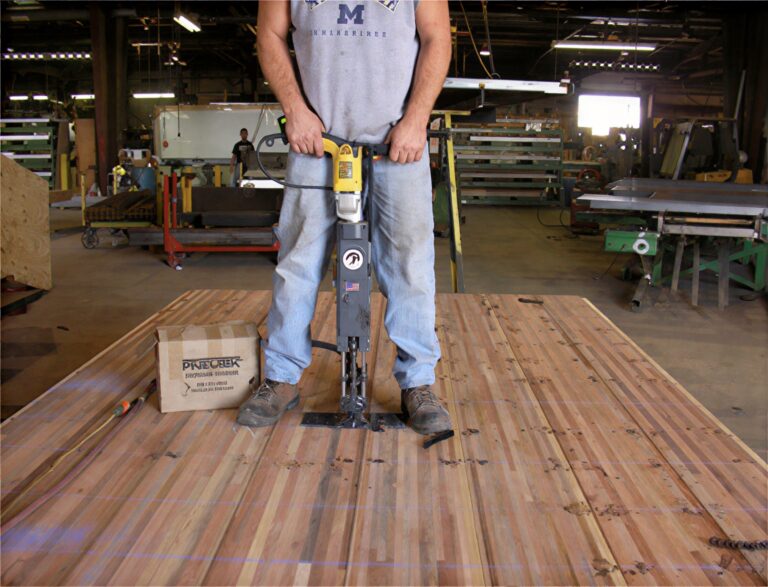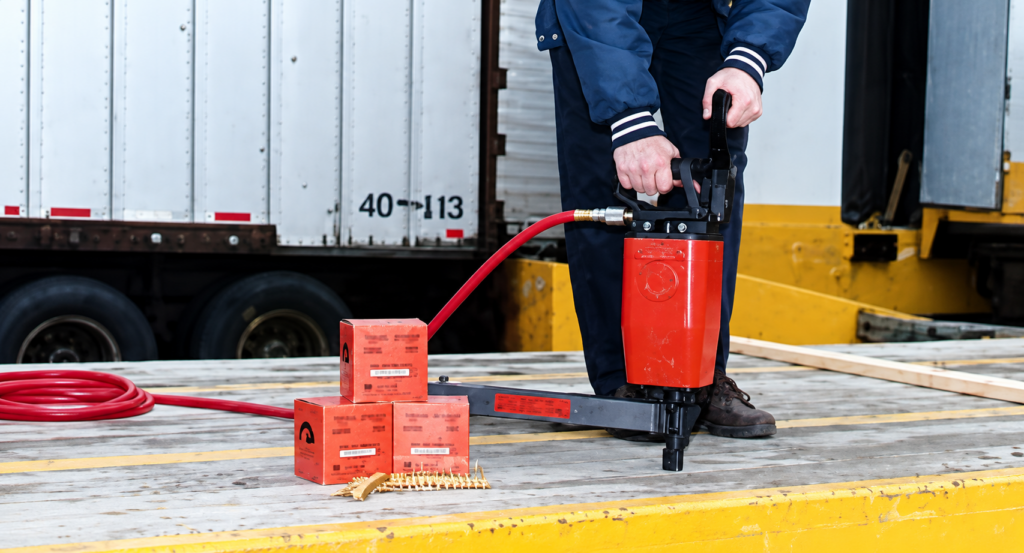
Pneumatic Fastening Systems in Brief
Fastening decisions affect more than the connection itself. They can influence labor requirements, installation schedules, jobsite coordination, inspection procedures, and the consistency of completed work. For steel decking, truck and trailer flooring, steel ledger, and insulation attachment, choosing the right fastening method is an important engineering and operational decision.
Pneutek® Inc. Pneumatic Fastening Systems use compressed air to drive matched fasteners into approved steel or concrete substrates. Unlike welding, the process does not rely on an electric arc. It also does not use the explosive powder charges associated with powder-actuated tools. However, pneumatic fastening is not suitable for every connection or project.
This guide explains how pneumatic forced-entry fastening works, where these systems are used, and how pneumatic fastening compares with welding and powder-actuated methods. It also covers system selection, technical documentation, operator training, equipment support, code considerations, and the factors project teams should evaluate before standardizing a fastening method.
The main takeaway: Installation speed matters, but it should not determine the decision on its own. The appropriate fastening system is the one that fits the engineered connection, substrate, project specifications, field conditions, workforce capabilities, and applicable evaluation requirements.
Fastening decisions affect more than the connection itself. They can influence labor planning, installation procedures, workflow consistency, jobsite coordination, and the documentation required before work begins.
For steel decking, truck and trailer flooring, steel ledger, and insulation attachment, project teams may evaluate several attachment methods. Welding remains appropriate for many engineered connections. Powder-actuated systems are also widely used. Pneumatic fastening provides another option when the specified assembly, substrate, fastener, and installation requirements support its use.
Pneutek® Inc. has designed and manufactured fastening tools, fasteners, and components in the United States since 1975. Its product portfolio includes pneumatic and electro-pneumatic systems developed for demanding attachment work. This guide explains how pneumatic fastening works, where Pneutek® Inc. Pneumatic Fastening Systems are used, how the method compares with other attachment options, and what project teams should review before selecting a system.
What Is a Pneumatic Forced-Entry Fastening System?
A pneumatic forced-entry fastening system uses compressed air to generate the driving force needed to install a fastener into steel or concrete. The pneumatic fastening tool and operating conditions work together as a system.
“Forced entry” describes installing the fastener into the receiving material. It does not mean that the same fastener or setting can be used across every substrate. Steel thickness, concrete conditions, attachment material, required capacity, edge distance, spacing, and other design factors can affect the correct selection.
A typical installation process includes:
- Confirm the application and receiving substrate.
- Select the specified Pneutek® Inc. tool and compatible fastener.
- Set up the approved compressed-air or electro-pneumatic equipment.
- Position the tool at the required fastening point.
- Drive the fastener according to the applicable instructions.
- Inspect the installed connection using the project’s acceptance requirements.
When the specified components and operating instructions are followed, a controlled driving process can support repeatable installation across a project. Final connection performance still depends on the complete assembly and the conditions defined in the relevant technical documentation.
What Efficiency Actually Means in Fastening Work
Efficiency is often reduced to installation speed. Speed matters, but it is only one part of the decision. For engineers, contractors, fabricators, manufacturers, and procurement teams, fastening efficiency can be considered across five connected areas.
Labor Utilization
An attachment method determines which skills are required, how much physical effort the process involves, and how crews are organized. Pneumatic tools can help reduce some of the repetitive manual effort associated with fastening operations. Actual labor requirements depend on the application, equipment configuration, jobsite plan, and training.
Workflow Continuity
Projects lose time when work must pause for equipment changes, missing consumables, access restrictions, or coordination with another trade. A well-planned pneumatic fastening program can simplify the installation sequence by aligning tools, fasteners, air supply, inspection criteria, and distributor support before work starts.
Recurring delays involving welder availability, inspections, weather controls, or rework may indicate a broader process issue. Review these five signs that attachment methods are slowing the project schedule.
Repeatability
Structural and manufacturing work requires consistent execution. Pneumatic driving can support a repeatable process when crews use the correct tool, fastener, substrate, and operating parameters. Repeatability should be verified through the application’s inspection and quality-control requirements.
Safety Planning
Pneumatic fastening does not create a welding arc and does not depend on explosive powder loads. This can change the hazards and controls associated with the fastening task. It does not eliminate the need for a job hazard assessment, personal protective equipment, tool safeguards, training, and compliance with site-specific procedures.
Technical Readiness
Productivity can suffer when technical questions are addressed after mobilization. Evaluation reports, engineering submittals, product data, fastener schedules, equipment requirements, and inspection expectations should be reviewed early. Pneutek® Inc. supplies technical documentation and engineering submittals, while authorized distributors support product selection, training, and field use.
Together, these factors provide a more useful measure of efficiency than cycle time alone.
Pneumatic Fastening Compared with Welding and Powder-Actuated Fastening
No single attachment method is appropriate for every connection. The comparison should begin with the engineered assembly and applicable requirements, then consider how each approved option fits the project.
For a steel deck-specific evaluation, review this screw-down versus weld-down steel decking comparison covering inspection, documentation, labor, safety, and long-term performance considerations.
| Consideration | Welding | Powder-actuated fastening | Pneumatic fastening |
|---|---|---|---|
| Driving energy | Electric arc and heat | Powder charge | Compressed air |
| Typical connection process | Fuses materials through a specified weld | Drives a matched fastener with a powder load | Drives a matched fastener with pneumatic force |
| Heat at the connection | Creates a heat-affected area | Does not use a welding arc | Does not use a welding arc |
| Primary consumables | Electrodes, wire, gas, or related materials, depending on the process | Fasteners and powder loads | Fasteners and compressed-air supply |
| Operator preparation | Depends on the welding process, specification, and jurisdiction | Tool-specific training and site requirements | Tool- and application-specific training and site requirements |
| Main selection basis | Weld design, procedure, materials, and workmanship requirements | Approved tool-fastener-substrate combination | Approved tool-fastener-substrate combination |
| Appropriate use | Determined by the engineer, specification, and field conditions | Determined by approvals, specification, and field conditions | Determined by approvals, specification, and field conditions |
Welding
Welding can provide an appropriate engineered connection for many steel assemblies. It also introduces requirements related to welding procedures, qualified personnel, equipment, power, surface condition, inspection, and hot-work controls.
For some projects, these requirements are already integrated into the construction plan. For others, the availability of qualified welding personnel or the coordination of hot-work activities can affect scheduling. These factors should be weighed against the connection design rather than treated as reasons to remove welding from consideration.
Powder-Actuated Fastening
Powder-actuated tools use a controlled powder load to drive a specified fastener. They do not use a welding arc, but they have their own operating, storage, training, noise, and site-control requirements. Tool, load, fastener, and substrate compatibility are central to correct installation.
Pneutek® Inc. manufactures pneumatic equipment and also has experience with semi-automatic and fully automatic powder-actuated systems. This broader engineering background can help project teams assess fastening as an application-specific decision.
Pneumatic Fastening
Pneumatic systems use compressed air rather than heat or a powder charge. Their suitability depends on the approved connection and the conditions under which the tool and fastener will be used.
Potential operational advantages can include a repeatable driving sequence, reduced reliance on welding-specific resources, and integration into high-volume fastening workflows. These advantages should be assessed alongside air-supply requirements, access, tool maintenance, training, inspection, and the applicable technical criteria.
Where Pneutek® Inc. Pneumatic Fastening Systems Are Used
The value of a fastening method becomes clearer when evaluated in the context of a real application. Pneutek® Inc. focuses on several established areas in which attachment quality and workflow consistency are important.
Steel Roof and Floor Decking
Steel deck attachment requires coordination among the structural design, deck profile, supporting steel, fastener layout, installation procedure, and inspection plan. A fastener cannot be selected only by diameter or appearance. The complete connection must match the project requirements.
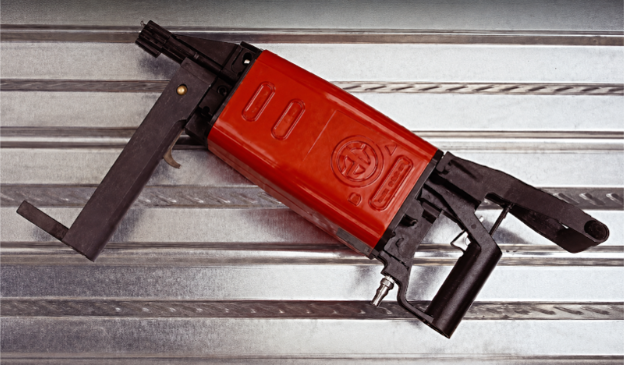
Pneutek® Inc. Pneumatic Fastening Systems provide a mechanical attachment option for qualifying steel roof and floor deck assemblies. Depending on the project, this approach may help teams reduce reliance on field welding for connections where an approved pneumatic fastener is specified.
Before use, project teams should confirm:
- Deck type and gauge
- Supporting steel type and thickness
- Fastener model and spacing
- Tool and operating requirements
- Design loads and connection details
- Applicable evaluation report
- Inspection and acceptance criteria
Early review is especially important when a team is changing from a familiar attachment method. Engineering approval, submittals, procurement, crew training, and field planning should be completed before installation begins.
Truck and Trailer Flooring
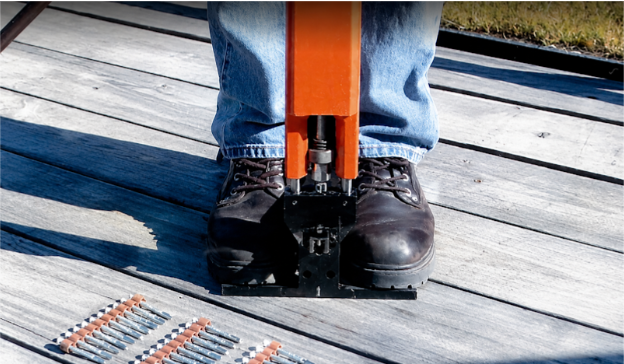
Truck and trailer flooring involves repeated fastening across a floor assembly. Production teams must balance connection requirements with throughput, operator effort, equipment uptime, and floor-material protection.
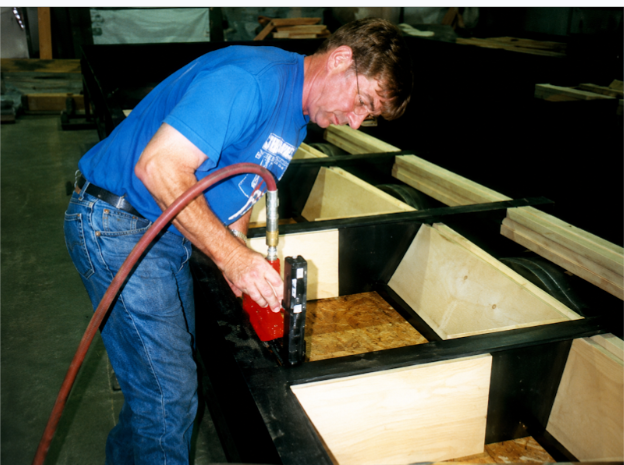
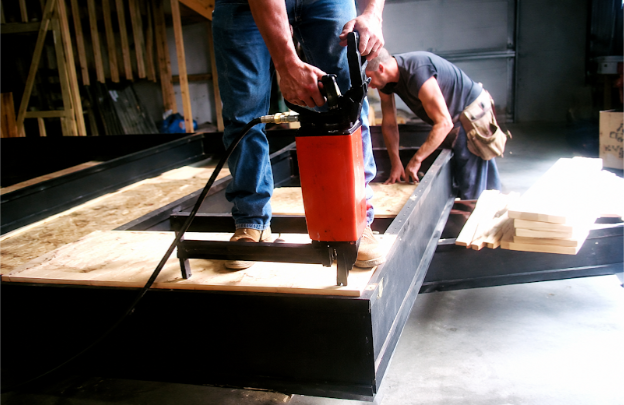
Pneutek® Inc. offers electro-pneumatic fastening technology for truck and trailer flooring attachment and repair. Electro-pneumatic equipment combines pneumatic driving with electrically controlled operation, supporting integration into production-oriented workflows.
System selection should account for:
- Floor material and thickness
- Frame or cross-member material
- Fastener type and required holding performance
- New production or repair work
- Tool access and production layout
- Air and electrical requirements
- Maintenance and spare-parts planning
High-volume work makes process discipline particularly important. A consistent setup, trained operators, scheduled maintenance, and clear inspection criteria help protect output quality over time.
Steel Ledger Attachment
Steel ledger connections can form part of a larger structural load path. The attachment method must therefore be reviewed within the engineered assembly rather than chosen only for installation convenience.
Where the design and applicable documentation allow it, Pneutek® Inc. Pneumatic Fastening Systems can provide a mechanical option for attaching steel ledger components to qualifying substrates. Engineers and contractors should verify substrate conditions, fastener location, spacing, design loads, and any limitations identified in the relevant report or submittal.
Insulation Attachment
Insulation systems may require attachment to steel or concrete as part of a wall, roof, equipment, or other building assembly. The insulation type, attachment component, substrate, environmental exposure, and project specification all affect selection.
Pneumatic fastening can support an efficient installation sequence for approved insulation attachment applications. The design team should confirm compatibility with the complete assembly, including any washers, clips, or other retention components.
How Pneumatic Fastening Can Support Project Delivery
The operational case for pneumatic fastening is strongest when it is connected to specific project requirements.
It Can Broaden the Available Installation Approach
Where a pneumatic connection is approved, contractors may have an alternative to assigning every attachment to a welding process. This can help teams allocate specialized labor according to the work that requires it. The effect will vary by project, so labor savings should be estimated from the actual fastener schedule, crew plan, and production rate.
It Can Reduce Hot-Work-Related Coordination for the Fastening Task
Because pneumatic fastening does not use an electric arc, it may avoid controls that apply specifically to welding operations at that connection. Site safety requirements still govern the work, and surrounding activities may still require hot-work controls.
It Can Support a Standardized Installation Process
Standardization begins with a defined tool, fastener, substrate, operating range, and inspection method. When those elements remain controlled, pneumatic fastening can help crews follow a consistent installation sequence across repeated connections.
It Can Simplify Consumable Planning
Pneumatic fastening uses compatible fasteners and a compressed-air supply rather than welding consumables or powder loads. That changes the procurement and logistics plan; it does not remove it. Teams still need sufficient fasteners, service parts, hoses, compressors or other power equipment, and backup arrangements appropriate to the project.
It Can Support Scalable Field or Production Workflows
Pneutek® Inc. systems serve small, mid-sized, and large projects. Scaling successfully requires more than adding tools. Air capacity, electrical supply for applicable equipment, crew training, distributor support, maintenance intervals, and inspection resources must grow with the work.
Safety Considerations for Pneumatic Fastening
Every fastening method introduces hazards that must be assessed and controlled. Pneumatic tools operate with stored energy and drive fasteners into hard substrates. Improper selection, setup, handling, or maintenance can lead to injury, damaged equipment, or unacceptable connections.
A project-specific safety plan should address:
- Manufacturer instructions for the selected tool and fastener
- Required operator training
- Personal protective equipment
- Tool actuation and contact-safety features
- Hose routing, fittings, and air-pressure controls
- Work-area access and protection of nearby personnel
- Substrate verification and concealed-condition checks
- Procedures for jams, misfires, damaged fasteners, and tool servicing
- Inspection before use and scheduled maintenance
The Air Safe Fastening System™ was developed as a pneumatic forced-entry fastening approach that does not rely on explosive powder loads. “Air Safe” should not be interpreted as hazard-free. Safe use still depends on trained operation, correct equipment, jobsite controls, and compliance with all applicable instructions and regulations.
Technical Documentation, Evaluation Reports, and Code Considerations
Technical documentation is essential when a fastening system contributes to a structural or otherwise regulated assembly. Product familiarity alone is not enough to establish suitability.
Pneutek® Inc. identifies ICC-ESR-2902 and ICC-ESR-2941 among its evaluation credentials. Evaluation reports apply to the products, assemblies, conditions of use, and limitations stated in each report. They should not be treated as blanket approval for every Pneutek® Inc. product or every possible connection.
Systems covered by an applicable evaluation report can support a code-compliant design when they are specified and installed in accordance with that report, the approved construction documents, and requirements of the authority having jurisdiction.
Before conversion or specification, teams should review:
- The current evaluation report covering the proposed system
- Product data and engineering submittals
- Approved substrates and thickness ranges
- Fastener spacing, edge distance, and installation criteria
- Published capacities and design assumptions
- Tool and operating requirements
- Special inspection or quality-control provisions
- Project-specific engineering details
Pneutek® Inc. supplies technical documentation and engineering submittals directly. This allows engineers and technical buyers to evaluate the proposed connection using source documentation. Product purchases, training, and on-site support are coordinated through authorized distributors.
What to Look for When Standardizing on a Fastening Method
Standardization can improve procurement, training, maintenance, and quality control, but only when the selected method fits the organization’s actual applications. Five criteria deserve close review.
1. Fastener Engineering and Application Fit
Start with the connection. Confirm that the fastener has documented suitability for the substrate, attachment material, loads, spacing, and environmental conditions involved. A broad product category is not a substitute for application-specific engineering.
2. Tool Durability and Manufacturer Support
Fastening equipment must perform under expected field or production conditions. Review maintenance needs, service procedures, replacement parts, troubleshooting information, and the availability of technical support.
Pneutek® Inc. addresses product engineering and documentation. Authorized distributors provide field-facing product support, including training and on-site assistance.
3. Compatibility Across Recurring Applications
Organizations working across steel decking, flooring, ledger, or insulation attachment may benefit from a coordinated fastening strategy. However, standardization should not force one tool or fastener into applications it was not designed to serve. Identify where equipment, air supply, maintenance practices, or training can be shared and where a separate configuration is required.
4. Technical and Field Support
Conversion often raises questions about submittals, connection details, tool setup, operator preparation, and inspection. Clarify who owns each part of the support process before purchase.
For Pneutek® Inc. Pneumatic Fastening Systems, the division is clear:
- Pneutek® Inc. provides technical documentation and engineering submittals.
- Authorized distributors handle sales, product training, and on-site support.
5. Pneumatic and Electro-Pneumatic Capability
The operating environment may determine which equipment configuration fits best. Field attachment work and production-line flooring operations do not present the same demands. Pneutek® Inc. offers pneumatic systems and electro-pneumatic technology, allowing teams to assess equipment according to the workflow rather than relying on a single configuration.
Planning a Conversion to Pneumatic Fastening
Changing attachment methods should be managed as a technical and operational conversion. A structured process reduces uncertainty before crews or production teams depend on the new system.
Step 1: Define the Connection and Performance Requirements
Document the substrate, attachment material, thicknesses, design loads, spacing, environmental conditions, and applicable specification. Identify whether the connection is structural and which approvals are required.
Step 2: Review the Technical Basis
Obtain the relevant evaluation report, product data, and engineering submittal. Confirm that the proposed tool-fastener-substrate combination falls within the documented conditions of use.
Step 3: Assess the Operating Environment
Review access, work position, air capacity, electrical needs for applicable equipment, production layout, weather exposure, nearby trades, and inspection access.
Step 4: Coordinate Supply and Support
Work with an authorized distributor to plan equipment, fasteners, training, service parts, and on-site support. Direct technical questions and submittal needs to Pneutek® Inc.
Step 5: Train Operators and Supervisors
Training should cover setup, correct actuation, fastener selection, recognizing unacceptable installations, routine checks, jam procedures, and shutdown practices. Supervisors and inspectors should understand the same acceptance criteria.
Step 6: Validate the Process Before Full Rollout
Use the project’s approved procedure to confirm installation quality under representative conditions. Record the accepted setup and inspection method before scaling to the full work area or production line.
Step 7: Monitor Installation and Equipment Condition
Track tool performance, air supply, fastener use, inspection findings, maintenance, and recurring issues. Process data can reveal whether a problem originates in equipment, setup, substrate variation, or operator practice.
Common Questions About Pneumatic Fastening Systems
What is a Pneumatic Forced-Entry Fastening System?
It is a fastening system that uses compressed air to drive a compatible fastener into an approved steel or concrete substrate. Suitability depends on the complete tool-fastener-substrate combination and the application requirements.
Can Pneumatic Fastening Replace Welding for Steel Decking?
It can provide an alternative for steel deck connections where the proposed pneumatic system is supported by the design, applicable evaluation report, project specifications, and authority requirements. It is not a universal replacement for welding.
Are Pneumatic Fasteners Approved for Structural Applications?
Some fastener systems are covered by evaluation reports for defined structural applications. The current report must be reviewed for the exact product, assembly, substrate, capacity, and conditions of use. Approval should never be assumed across an entire product range.
What is the Difference Between Pneumatic and Powder-Actuated Fastening?
Pneumatic tools use compressed air as their driving energy. Powder-actuated tools use a controlled powder charge. Both require compatible fasteners, trained operation, maintenance, and compliance with the relevant instructions and site procedures.
Who Provides Training for Pneutek® Inc. Tools?
Authorized distributors provide product training and on-site support. Pneutek® Inc. provides technical documentation and engineering submittals.
How Should Pneumatic Fastening Tools Be Maintained?
Maintenance should follow the instructions for the specific tool. Routine work may include inspection, cleaning, lubrication where required, checking hoses and fittings, replacing worn components, and addressing performance changes before the tool returns to service.
What Information is Needed Before Requesting a Fastening Recommendation?
Useful information includes the application, substrate material and thickness, attachment material, connection details, required capacity, fastener spacing, project location, governing requirements, work volume, and operating environment.
Building a More Reliable Fastening Program
The most effective fastening decision is not simply the fastest tool or the most familiar method. It is the system that satisfies the engineered connection while fitting the project’s labor plan, safety requirements, workflow, inspection process, and support structure.
Pneutek® Inc. brings more than five decades of U.S.-based fastening experience and 45 patents to pneumatic and electro-pneumatic attachment technology. Its confirmed application areas include steel roof and floor decking, truck and trailer flooring, steel ledger, and insulation attachment.
For organizations evaluating Pneutek® Inc. Pneumatic Fastening Systems, the next step is to assemble the application details and review the relevant technical documentation. Pneutek® Inc. can support engineering and submittal questions, while an authorized distributor can assist with product availability, training, and on-site implementation.
Pneutek, Inc. supplies pneumatic fastening systems for the mechanical attachment of steel roof and floor deck across the United States. Contact Pneutek® Inc. to request technical information or to connect with an authorized distributor for the proposed application.
Frequently Asked Questions
Where are Pneutek® Inc. Pneumatic Fastening Systems used?
Confirmed applications include steel roof and floor decking, truck and trailer flooring, steel ledger attachment, and insulation attachment. The appropriate system depends on the substrate, connection requirements, and project specifications.
Can pneumatic fastening replace welding for steel decking?
Pneumatic fastening may provide an alternative to welding for certain steel deck connections. However, it cannot replace welding in every application. The fastening method must meet the project's engineered design, applicable evaluation report, specifications, and local code requirements.
How does pneumatic fastening differ from powder-actuated fastening?
Pneumatic systems use compressed air to drive fasteners, while powder-actuated systems use a controlled explosive charge. Each method has its own tools, training requirements, operating procedures, fasteners, and approved applications.
Are Pneutek® Inc. fasteners approved for structural applications?
Certain Pneutek® Inc. systems and assemblies are covered by ICC evaluation reports, including ICC-ESR-2902 and ICC-ESR-2941. Project teams should review the report relevant to the specific product and assembly rather than assuming that one approval applies to the entire product range.
What factors should be considered when selecting a pneumatic fastening system?
Selection should account for:
- Substrate material and thickness
- Required connection performance
- Fastener type and dimensions
- Tool compatibility
- Project specifications
- Applicable evaluation reports
- Site access and working conditions
- Operator training and equipment support
An engineer or qualified project professional should confirm the fastening requirements for the application.
Do operators require training to use pneumatic fastening tools?
Operators should receive training covering tool setup, air-pressure requirements, fastener loading, safe operation, inspection, and routine maintenance. Pneutek® Inc. customers are directed to authorized distributors that provide product training and on-site support.
Where can customers purchase Pneutek® Inc. products?
Pneutek® Inc. products are sold through authorized distributors. End users who contact the manufacturer about purchasing are referred to the appropriate distributor for product sales, training, and field support.
Who provides technical documentation and engineering submittals?
Pneutek® Inc. provides technical documentation and engineering submittals directly. Authorized distributors manage product sales, customer training, and on-site support.
What maintenance do pneumatic fastening tools require?
Maintenance requirements depend on the tool and its operating conditions. Routine care may include inspecting the tool and air supply, checking components for wear, keeping the equipment clean, and following the manufacturer's service schedule. Operators should use the applicable manual and contact an authorized distributor when service support is required.